Tuesday, May 31, 2016

HOW TO CHOOSE PALLETS IN SHIPPING: PLASTIC VS. WOODEN?

Pallets, as a common freight packaging option, are used in logistics of the transportation process, from storing the items in a warehouse to enabling them to be moved in bulk as well as keeping them protected and allow for easy movements during transportation.
A pallet can be described as a horizontal platform device, which is used as a base for transporting, handling, storing and assembling both products and materials as a unit load. In addition to this, pallets are designed to ensure that no damage occurs to the goods inside when another pallet is loaded on top of it.
Just like shipping containers, with safe and easy-handle properties, pallets are widely used across the world in almost every warehouse, truck and cargo ship.
As compared to non-palletized dispatching of cargo consignments, pallet shipping is definitely costly. However, their cost-effectiveness by effectively minimizing the potential risks and damages to the consignments makes the pallet cargo a must-have in the freight shipping industry.
When it comes to pallet material, there are two chief options at your disposal: Plastic Pallets and Wooden Pallets.
This post will assess the advantages and disadvantages associated with both in order to help you make the right decision for your shipping needs. So, keep on reading to find out all you need to know.

Wooden Pallets


Advantages

There are many advantages associated with the use of wooden pallets.
One of the main reasons people opt for this type of pallet is because it tends to be the least expensive. This is ideal for those purchasing on a budget.
Pallets made of wood are also easy to repair, which represents another way in which you can save money if you go for this option. All you need to do is remove and replace one of the broken wood boards, rather than replace the pallet as a whole.
In addition to this, wood offers benefits in relation to recycling. The wood used to construct the pallet can be collected from recycled materials and once the pallet is no longer needed it can then be recycled into paper and mulch.
Aside from this, wood boasts other benefits in the sense that it is a lot easier and quicker to construct. This is especially significant for those who are using a substantial number of pallets.
On the whole, wood is strong and robust. It also offers a greater level of security because they boast a high level of friction, this is even better compared with plastic. This ensures that the shipment do not easily slide off when they are on the pallet.

Disadvantages

There are also some negatives you need to bear in mind as well.
Wood has its own disadvantages. One of the main problems is the fact that wood is an organic material and consequently it can quickly warp, weaken or splinter. Thus, whilst you may save money in relation to your initial start up costs, you may actually end up spending more because of continual reordering costs.
The individuals who handle the pallets often experience nasty surprises because of protruding nails or splinters. Needless to say, a nail or splinter digging in your hand is not a pleasant experience.
Aside from this, wood pallets are extremely difficult to clean. This is because bacteria and fungus is encouraged to grow when wood becomes wet. Last but not least, wood has to be treated in order to be shipped internationally because wood can contain invasive species of insects or plant diseases.

Plastic Pallets


Advantages

Plastic pallets also offer an excellent solution to pallet logistics.
One of the best things about plastic is the fact that it lasts for a long time. You can expect to get at least ten years of use out of plastic material, thus you can save money in the long run.
Plastic also provides you with another way to reduce your expenditure by reducing shipping costs, as plastic is approximately 30 percent lighter than wood.
You also don’t have to deal with interruptions in delivery. When shipping wood you have timber pallet regulations to contend with.
Aside from the points that have been mentioned, it is also worth noting that plastic is safe to handle, as you don’t have to worry about chipping, splinters and screw nails.
Plastic is also resistant to chemicals, such as alkalis and acids, and thus they can be cleaned easily. In order to remove bacteria plastic pallets can be chemically sanitised, steam cleaned or hot washed. If that wasn't enough, they are entirely recyclable and can be turned back into a new pallet.

Disadvantages

As mentioned earlier in this post, plastic is more expensive than wood, and thus the start up costs can be substantial. Thus, this is an obvious downside.
In addition to this, another disadvantage is the fact that plastic pallets cannot be easily repaired. If the plastic breaks or cracks, you would have to melt it down and re-mould it in order to make another one. This is obviously a lengthy and inefficient process and thus would lead most people to purchasing a new pallet instead.
As touched upon earlier, plastic does not boast as much friction as wood does. This is detrimental because the materials and products can easily end up sliding or falling off the pallet if you are not careful. Thus, this is something you should be wary of.
Moreover, you need to be sure you purchase quality plastic otherwise the pallet can easily be too weak and susceptible to breakages.

When selecting the right material for your logistics and transportation needs, there is no right or wrong solution. It is all about finding what works for you.

Monday, May 30, 2016

10 MOST BUSIEST CONTAINER PORTS

No. 10: Tianjin, China             

The Tianjin port in China recorded 13.01 million TEUs in 2013, up from 12.3 million in 2012 and 11.59 million in 2011. TEU stands for "twenty-foot equivalent units". A standard cargo carrier equals two TEUs.

No. 9: Jebel Ali Port in Dubai, U.A.E.                

This Dubai port handled 13.64 million TEUs last year, up from 13.3 million in 2012 and 13 million TEUs in 2011, according to the World Shipping Council.  The U.A.E. has successfully positioned itself as the hub between East and West shipping lanes, with more capacity currently being built out at the Khalifa Port outside of Abu Dhabi, the U.A.E. capital.


No. 8: Guangzhou Harbor, China

Despite a slowdown in exports out of China, the Guangzhou port continues to handle more cargo.  In 2013 it handled 15.31 million TEUs of cargo, up from 14.74 million in 2012 and 14.42 million in 2011.


No. 7: Qingdao, China                                                                                    

Qingdao handled 15.52 million TEUs last year, up again from the 14.5 million in 2012 and the 13.02 million TEUs recorded in 2011. Not bad for a country supposedly going through a hard landing.


No. 6: Ningbo-Zhoushan Port, China

The Ningbo-Zhoushan Port handled 17.33 million TEUs in 2013, up from the 16.83 million in 2012 and the 14.72 million TEUs in 2011.


No. 5: Busan Port, South Korea

Continued growth in shipping at Busan. Last year saw 17.69 million TEUs go through the port, up from the 17.04 million in 2012 and 16.18 million in 2011.


No. 4: Hong Kong

The port of Hong Kong used to be the biggest of all Chinese ports, but not anymore.  Last year, Hong Kong continued to handle a dwindling number of containers as more and more ships head north to the mainland instead.  The Hong Kong container port terminal handled 22.35 million TEUs in 2013, down from 23.12 million in 2012 and 24.38 million TEUs in 2011.


No. 3: Shenzhen

Shenzhen is now the second largest Chinese port. Last year it handled 23.28 million TEUs, up from 22.94 million in 2012 and 22.57 million TEUs in 2011, according to the World Shipping Council.


No. 2: Singapore

The Port of Singapore is no longer No. 1, but container traffic remains strong.  Last year, the port recorded 32.63 million TEUs compared with the 31.65 million in 2012 and 29.94 million TEUs in 2011.


The New Number One.

The new No. 1 is the Port of Shanghai.  It handled 33.62 million TEUs of cargo in 2013, up from 32.53 million in 2012 and the 31.74 million TEUs reported in 2011.  The biggest U.S. port is puny by comparison.

WHY YOUR FREIGHT SHIPPING DELAYS?

Lots of cargo shipments move from one point to the other every single day. There’s always someone waiting on the other side for the shipment to arrive.
Estimated transit time is meant to be as accurate as possible, so that the consignee can know when to expect their cargo and when to arrange a pick up. If it does not arrive as planned, this can create problems both for the shipper and the consignee.
Everyone don’t like delay, but when it comes to ocean freight transportation, chances are big that you will have some sort of delay at some point that will be completely beyond your control and may be beyond your supplier’s control as well.
As an importer, you hope to know why your shipping delays. Here’s a list of main reasons, some of them you can avoid.

Before the vessel departure
1. No spaces of the scheduled vessel.
This happens from time to time, especially when holiday shipping or busy season shipping.
Solution: Plan ahead and book your space two weeks earlier before the production is done.

2. Can’t deliver your goods to the port before the cut off time.
For FCL, the consignor usually pick up the container and load it by themselves in their facility, then deliver the full container back to CY (container yard) or CFS (container freight station).
For LCL, the consignor need to deliver the shipment to the warehouse of the forwarder for consolidation.
No matter it’s FCL or LCL, there’s always a Cut-Off date issued by the carrier. Missing the date means missing the scheduled vessel.
Solution: Pick up the empty container as early as possible, and make all the arrangements for land transportation earlier.

3. Customs declaration issue before the cut off time.
3.1 Improper categorization of HS code
As you may know, the suppliers can get tax refund from the government based on the HS code of the products for most items. The tax refund rate vary. And because of that, some suppliers will use wrong HS code when conducting customs clearance, just to get higher tax rebate rate.
If the customs find it out, they will detain the products until the supplier correct the HS code and pay penalty.
3.2 Intelligence property rights protection
If the product has brand, the supplier will be requested to submit an authorization letter from the brand owner. This process will cost long time if not prepared accordingly.
Solution: Make sure every paperwork needed is correct and in time.

4. The vessel left late due to weather.
Solution: Nothing
Your action: Get the information as early as possible, then notice every party involved at your side.
The easiest way is to plan ahead and book in advance and drop off your cargo as soon as you are allowed to gate it in.
Work closely with your supplier and your cargo agent to make the shipment as efficient as possible.

During the transit
The main reason for cargo delays during the process is that the vessel changed the routing and will make additional stops.
According to the latest research from Drewry, the average on-time rates of container carriers are 64%, and Maersk Line is the No. 1 with about 80% punctuality rate.
Nothing you can do about this, even including your agent. But the freight forwarder can keep touch with the carrier, and let you know the adjusted ETA as soon as possible.

After the transit
When the steamship crossed the ocean, and were arriving at the destination port, trouble still happens. Such as the latest West Coast dockworkers dispute.
This kind of port delays can be avoided by choosing a different destination earlier. It may result in higher price, but the time saved are more valuable in some cases.

Holiday Impact
There are many various holidays, usually one day or three days break. These holiday have little effect on shipping. But you have to pay attention to following 2 major & long holidays.
Here’s the shipping situation:
1. Too much cargo to ship
Booking container space is very difficult in Jan, and the freight cost is relatively high, because everyone wants their goods departure before the New Year.
2. Too less cargo to ship
Booking container space is so easy in March, and the freight cost is relatively low, because the manufacturers need time for production after the New Year.
Solution: Try to avoid these holidays, or fully prepare for long breaks.
Your action: Get a timetable from your supplier, because different situations vary from different factories.

What you should do when your shipping delays?
Scheduling enough time to get your product through customs and onto a ship can be tricky business. Plan ahead as far as you can and work with suppliers to constantly update the final manufacturing completion date accordingly.
When your delivery delays, the best thing you can do is be patient, and communicate consistently with your freight forwarder. Make sure you get all the information available, so that you can communicate honestly and directly with your production, customers, retailers or whomever the delay may concern.
Even if you arrange everything ahead and have a plan, sometimes your shipment will be delayed, so be sure to add some buffer days into your supply chain timeline.

Monday, April 25, 2016

FOUR FACTORS FOR CONSIDERING AIR FREIGHT VS. OCEAN FREIGHT

Choosing the correct mode of transport can be tricky. It's often a question of time and money. Do your goods need to be moved quickly? Or would you rather keep costs down? You probably want to strike a good balance between the both. When choosing your shipping options with a Freight Forwarder, you may choose air or ocean shipping, there are many choices to consider.
Cost
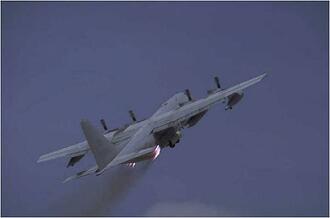
You probably don’t have to be told to consider the costs before an undertaking. As a business person, you consider the bottom line and as an individual, you have a budget. Naturally, you’re going to want to know which will cost you less, air freight or ocean freight. Typically, you will hear that shipping by the ocean is cheaper than shipping by air. And typically, this is true; however, this is not necessarily Cargo Jet Planethe case.
To make the best decision, it helps to be educated about how carriers charge for international shipping. Airlines bill you by what is called a chargeable weight. Chargeable weight is calculated from a combination of the weight and size of a shipment. Sea carriers charge per container rates for shipping in standard containers (20’ and 40’ being the most common sizes). While weight can factor into the price from sea carriers, their charge tends to be based more on the size of a shipment. If you are shipping less than a container load, your price is often determined by cubic meter. With larger and heavier shipments, it is often much cheaper to ship by sea. As a shipment gets smaller, the margin between the prices gets smaller and sometimes air will even end up less expensive.
Shippers should note that there are destination charges to consider. Whether shipping by air or by sea, there will be customs and destination fees. While the actual shipment cost of sea freight is usually cheaper than the shipment cost of air freight, the warehousing fees at seaports are many times more expensive than those at airports.

Speed
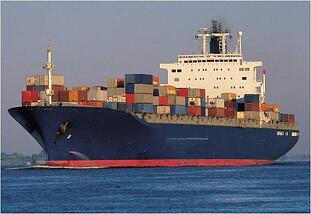
When it comes to speed, there is no question that air freight is usually much Cargo Shipfaster. Since time is money, this factor could more than makeup for a higher cost of flying cargo. Many sea shipments can take around a month to arrive while an air shipment takes a day or two. For most business shipping, faster is better. When it comes to the individual moving a household, it is often good to have the extra time to prepare for the arrival of household goods in a new country. It should be noted that technology keeps moving forward in the international shipping world. Ships are getting faster. Canals have created shorter shipping routes. There are many ocean freight shipments crossing the oceans and being delivered in as few as 8 days.

Reliability
Reliability is something we all look for in people, businesses, products, and services. How does ocean freight and air freight stack up against each other in this category? Air freight shipping has a much, much shorter history than ocean freight shipping, yet air freight tends to win the battle of reliability. Flights get delayed by weather and other factors, but airlines tend to be very on top of their schedules. Ocean carriers are notorious for being bad about this. It is not uncommon for ships to be off schedule. For many, a day or two here or there doesn’t hurt; however, for many businesses, a day or two could have serious cost effects. With airlines, there are usually daily flights back and forth between major cities around the world. Because of this, missing a flight doesn’t cause much of a delay for a cargo shipment. Ocean lines tend to have weekly schedules. Missing the cutoff at a seaport means a longer delay.

Environmental Impact
Not everything is about the bottom line and convenience. While the social awareness of environmental issues can change the way the public looks at a company and affect its bottom line, we all have a responsibility of taking care of the planet on which we live. It would seem that ocean freight wins this category. CO2 emissions are much higher in air freight transport than ocean freight transport. This causes cargo shipping by air to have a much larger carbon fingerprint than cargo shipping by sea. However, considering oil spills and the water ecosystems affected by ocean freight, gives pause. 

Considering these four factors should help you make the best decision for your cargo shipment. Logical Maritime Services Limited offers free ocean and air rate pricing.

Tuesday, April 19, 2016

WHAT DOES SHIPPERS LOAD, STOW AND COUNT MEAN?

Shippers load, stow and count or Shippers load and count or SLAC is a term that you would have seen in the description of the bill of lading for all shipments. What does it mean to the line and to the shipper?
In all break-bulk and bulk vessels, there is a document called Mate’s Receipt. This document is like a delivery note and has all the information pertaining to the shipment like cargo description, number of bundles, weight, measurement etc and this note is handed over to the ship at the time of loading.
If any discrepancies are found between the actual cargo delivered and the Mate’s Receipt, the Chief Mate (after whom this receipt is named) a.k.a 1st Mate, 1st Officer, Chief Officer will check the cargo and note such discrepancies to confirm that the cargo was received in that condition. This absolves the ship/owner/charterer of any claims relating to missing or damaged cargo etc that might be levied upon them by the shipper at a later stage.
This was possible in the era of pre-containerization because the ship/agents were able to physically check and verify the cargo.
However, in the case of containerized cargoes and specially FCL cargoes, the carrier/agents are not privy to the packing of the containers and the nature of the cargo. The carrier relies on the information provided by the shipper in terms of the cargo, number of packages, weight and measurement.
Hence the clauses “SHIPPERS LOAD STOW AND COUNT”  (SLAC) and “SAID TO CONTAIN”  (STC) is put on the bill of lading to protect the carrier from any claims that the shipper might levy on them at a later stage.
For example: Lets assume that the bill of lading states 1×20′ container STC 55 bundles of human hair and when the container reaches the destination and consignee unpacks the container to find that there is only 45 bundles. The bill of lading carries the above clauses.
As long as the seal has not been altered or tampered with, the consignee or shipper cannot question or hold the carrier liable for the shortage because the carrier was not present at the time of the packing of the container and carrier doesn’t know what the Shipper Loaded, Stowed or Counted. Bill of lading shows the details that was provided by the shipper, so the consignee must contact the shipper to take up this issue.
If however, the seal number has been altered or tampered with, that becomes a totally different story for another day.

Tuesday, April 5, 2016

HOW TO FIND THE RIGHT MOVERS TO MEET THE NEEDS YOU HAVE

How and where will I find the right movers for my personal cargo?

An important question for many people who maybe relocating from one place to another, in some cases across the world.
A smooth and successful move will start with finding a qualified moving service to help handle all of the details of the transaction. The fact is that professional movers are extremely competitive in the field and offer a number of options in terms of commercial and residential moves.
Even though the basic services that are offered may be similar, you will find that movers are different in terms of customer care, moving costs and company resources.
Before you actually hire a company to help with moving, you need to decide
  1. what type of services that you need and
  2. the price that you are willing to pay.
When you know these two aspects of the move, you will be ready to research the various options and find one that meets your specific needs.

What Makes One Moving Service Different from the Next?

Just like any other business out there, moving services can range from superb to quite bad, with a number of options some place in between.

The prices that company charges can provide you with an indication of the type of business that you are going to be dealing with; however, cost alone will not provide a guarantee about the level or quality of service that you will receive.
This means that you need to take some time to do your homework and compare the different features offered by the companies in your area.
Any mover that is diligent, personable, trustworthy and dependable will stand out from their competition.

The Benefit of Mover References and Referrals

If it is at all possible, you should try to get a referral for the movers that you plan to hire. Ask your friends, co-workers or anyone else about their experience with moving companies and which one they would recommend.
If you are not able to get a referral to a certain company, then you should ask for references from the moving company that you are considering using.

When you take the time to check the references, you will be able to know what to expect from a moving company.
It is important to remember that moving is hard and labour-intensive work. This means that you need a responsible and diligent team working for you.
Finding a capable mover will help to reduce the stress of the move and ensure all of your belongings arrive at their new site intact.

The effort that goes into finding the right moving company will be more than worth it. The right moving company will be able to get a person moved in no time.

Thursday, March 24, 2016

EVERYTHING YOU NEED TO KNOW ABOUT THIRD-PARTY LOGISTICS

What’s 3PL? Nope - it’s not a new brand of office supplies! 3PL stands for third-party logistics, a service that allows you to outsource operational logistics from warehousing, all the way through to delivery, and ultimately enables you to focus on other parts of your business. 
Third-party logistics companies provide any number of services having to do with the logistics of the supply chain. This includes transportation, warehousing, picking and packing, inventory forecasting, order fulfillment, packaging and freight forwarding. Wondering if your business needs to use a 3PL provider?

Here’s the good
Using a 3PL provider offers lots of advantages. The biggest is that by handing over these logistics, you can focus on other aspects of your business such as sales, marketing, and product development. Outsourcing 3PL leaves you with more time and resources. Here are a few other advantages:
1.Gain instant expertise and knowledge in the field.
Especially if you’re just starting out, who better to take care of your logistics than a company that specializes in them? Fulfillment, warehousing, and shipping come with major challenges of their own, so handing it off to the experts can really make a difference in the way you function - and it leaves you to focus on increasing your overall value to your customers.

2.Get a handle on international logistics.
If you’re selling internationally, 3PLs can take care of documentation, customs, duties and other issues that come up at the borders that can delay your shipments and result in high costs if not done thoroughly. Plus, you save time trying to work out complicated rules pertaining to different countries.

3. Generate cost savings.
When it comes to warehousing, not having to maintain your own space and staff can be a big cost-saving measure. Also, companies that provide good inventory forecasting can help optimize your inventory levels and save money on inventory holding costs.

Here’s the not-so-good
However,a 3PL isn’t for every business. Here are a few drawbacks for you to consider. Would these impact your business?

1. More distance between you and your product.
The 3PL you choose may position you far away from your products, which would be an inconvenience if you run into quality control issues, or need to physically inspect your stock for any reason.

Having said all that, not all  3PL providers are equal!
There are a variety of different 3PL companies and they all offer different levels of support. Some take care of warehousing and fulfillment only, some add forecasting to their services, others focus mostly on shipping and delivery, and so on.

Some companies only take over the fulfillment and shipping of your orders and have many clients. Others offer integrated solutions and only have a few clients that they focus on exclusively to provide a much more customized, in-depth service.

Which 3PL company is right for you?
Because of the sheer number of options, choosing a final provider can be an overwhelming process. Cost and services offered aside, remember that this is a company that will be taking on a major part of your operations. You’re basically inviting them into your business - make sure they’re worthy of the invite.

Here are a few things for you to consider when making that decision:

1. Current and forecasted volumes
Choose a 3PL that can handle your current volume, but that also will be ready to handle your volume if you suddenly add a bunch of new stock, increase your stock volumes, or have a great spike in sales. You want to choose a 3PL that can handle your business now and handle it when you’re at full speed!

2. References and business performance.
Check out references from other customers that use the 3PL provider and get a report on the company’s performance over the last few years. Seek out references and information about on-time deliveries versus delays, and how they compensate businesses when there are problems. See what their customers are saying about them - customer case studies and quotes are a good indicator of how the 3PL provider has built and maintained the customer relationship.

3. Compatible technology
If you’re rockin’ a cloud-based inventory management system, you should probably choose a company that is similarly cutting-edge and ready to integrate with your system. Ensure that the 3PL provider’s technology works with how you work.

Ready for a 3PL?
Hiring a 3PL company to take care of your logistics can really improve your supply chain and increase sales. Take the time to weigh the pros and cons, and to ensure a good fit between you and your third-party logistics provider.

Tuesday, March 22, 2016

WHAT TO DO WHEN THE ORIGINAL BILL OF LADING IS LOST?

If a negotiable bill of lading is lost, stolen, or destroyed, a court order can be secured and this court order advises the carrier (shipping line) to deliver the goods to the actual and final receiver of the cargo. In such cases, the carrier also should receive an indemnity letter indemnifying the carrier or any person injured by delivery, against liability under the outstanding original bill. The court also may order payment of reasonable costs and attorney’s fees to the carrier.
Or in some cases, certain lines accept the indemnity if it is signed by a bank who would then take joint liability to return the original bills of lading (if found).
The indemnity generally has wording as below. Please note that this is a “generic” format and most lines have their own requirement.

“To the Owners and/or Charterers and/or operators and/or carrier and/or Agents and Masters of M.V.
In consideration of your issuing at my/our request a duplicate set of Bills of Lading for the goods mentioned below, viz.:
Goods: …………………………………………
No. of pkg.: …………………………………………
Description: …………………………………………
Marks: …………………………………………
Bill of lading or other contracts of carriage: …………………..
Due to the fact that the original set has been lost I/we hereby agree and undertake to indemnify you and each of you from all consequences of so doing, and I/we undertake to hold you and each of you harmless and indemnified against any claims, liability, losses, costs, charges, fine damages and expenses (including any kind of legal expense) arising from in consequence of or in any way connected to anybody claiming delivery of the goods as owner or assignee or as the holder of any Bill of Lading originally issued for these goods.
1. In this connection I/we especially undertake to hold you and each of you harmless and indemnified against any loss on account of differences in rate of exchange or depreciation of currency and/or depreciation of value and/or loss caused by currency restrictions or exchange restrictions issued by any authority. Furthermore, I/we undertake to produce and deliver to you or each of you not only the duplicate set of Bills of Lading but also all Bills of Lading which were originally issued if these should, later on, be found.
2. In the event of any proceedings being commenced against you or any of your servants or agents in connection with the delivery of the goods as aforesaid to provide you or them from time to time with sufficient funds to defend the same.
3. If the vessel or any other vessel or property belonging to you should be arrested or detained or if the arrest or detention thereof goods as aforesaid to provide you or them from time to time with sufficient funds to defend the same.
 
ISSUANCE OF DUPLICATE BILL OF LADING IN CASE ORIGINAL LOST
4. as soon as all original Bills of Lading for the above goods shall have arrived and/or come into our possession, to produce and deliver the same to you whereupon our liability hereunder shall cease.
5. The liability of each and every person under this indemnity shall be joint and several and shall not be conditional upon your proceeding first against any person, whether or not such person is party to or liable for this indemnity.
6. This indemnity shall be construed in accordance with English law and each and every person liable to this indemnity shall at you request submit to the jurisdiction of the High Court of Justice of England. (This clause may be amended to show another jurisdiction where appropriate).
7. Where this indemnity has been joined in and countersigned by a bank, the issuer and the bank shall be jointly and severally liable hereunder.
Signature …………….
We hereby join in the foregoing undertaking:
Signature of the bank …………………”

Monday, March 21, 2016

UNDERSTANDING THE FREIGHT RATE SHEET

Deciphering freight rate sheets can be a daunting task for those with little or no experience in the shipping industry. However, it is crucial that shipping customers understand the information they contain, especially when they will benchmark their ocean freight prices. Therefore, we have compiled a list of common terms and abbreviations that may be found on a freight rate sheet.
Accessorial Charges - Charges that are applied to the base tariff rate or base contract rate, e.g., bunkers, container, currency, destination/delivery.

Aden War Risk Surcharge - A surcharge on goods transiting the Gulf of Aden used to compensate shippers for additional costs including crew risk compensation, cancellation of economical speed, and redeployment of vessels.

Ad Valorem - A term from Latin meaning, “according to value.” An import duty applied as a percentage of the cargo’s dutiable value.

AI - Abbreviation for “All Inclusive.” The total price to move cargo from origin to destination, inclusive of all charges (limited to transportation costs).

Arrival Notice - A notification by carrier of ship’s arrival to the consignee, the “Notify Party,” and – when applicable – the “Also Notify Party.”

BAF - Abbreviation for “Bunker Adjustment Factor.” Used to compensate steamship lines for fluctuating fuel costs. Sometimes called “Fuel Adjustment Factor” or FAF.

Base Rate - The cost of shipping a container from one point to another. Rates fluctuate frequently based on a number of different factors.

BL Fee - “Bill of Lading Fee.” A fee charged by the shipping line for the processing of the bill of lading on behalf of the client.

BUC - Abbreviation for “Bunker Charge.” An extra charge sometimes added to steamship freight rates; justified by higher fuel costs. Also known as Fuel Adjustment Factor or FAF.

CAF - Abbreviation for “Currency Adjustment Factor.” A charge expressed as a percentage of a base rate that is applied to compensate ocean carriers of currency fluctuations.

Cargo Data Declaration Fee - A surcharge assessed for the additional costs of declaring cargo information in advance to the European Union authorities as required for authorities to evaluate any potential security and safety threats.

Carrier - Any person or entity who, in a contract of carriage, undertakes to perform or to procure the perfor­mance of carriage by rail, road, sea, air, inland waterway or by a combination of such modes.

CBM (CM) - Abbreviation for “Cubic Meter.”

CFS - Abbreviation for “Container Freight Station.” A shipping dock where cargo is loaded (“stuffed”) into or unloaded (“stripped”) from containers. Generally, this involves less than containerload shipments, although small shipments destined to the same consignee are often consolidated. Container reloading from/to rail or motor carrier equipment is a typical activity. These facilities can be located in container yards or off dock.

Chassis Utilization Surcharge - A fee imposed for the use of a chassis in conjunction with the shipping container to facilitate overland transportation.

CL - Abbreviation for “Container load”.

COD - Abbreviation for “Collect (cash) on Delivery.”

Congestion - The term used for situations where ships have to queue up and wait for a spot so they can load or offload.

Container Yard (CY) - A materials–handling/storage facility used for completely unitized loads in containers and/or empty containers. Commonly referred to as CY.

CSF - Abbreviation for “Carrier Security Fee.” Charges for the security of cargo during the shipment.

Customs - A government agency charged with enforcing the rules passed to protect the country’s import and ex­port revenues.

Customs Filing Fee - A fee paid to the customs broker for arranging your customs clearance.

Customs Formalities - Requirements referring to customs regulations including documentation, security, information and physical inspection responsibilities.

CYRC - Abbreviation for “Container Yard Receiving Charge.”

DDC - Abbreviation for “Destination Delivery Charge.” A charge, based on container size, that is applied to many tariffs to cargo. This charge is considered accessorial and is added to the base ocean freight. This charge covers crane lifts off the vessel, drayage of the container within the terminal and gate fees at the terminal operation.

Demurrage - A penalty charge against shippers or consignees for delaying the carrier’s equipment or vessel beyond the allowed free time. Demurrage applies to cargo; detention applies to equipment. If you store a container at the port beyond free days, then demurrage and detention apply. If you keep a container for too long on any other premise (not on the port’s premises), then only detention applies.

Destination 
– The place to which a shipment is consigned or the place where the carrier actually turns over cargo to the consignee or his agent.

Detention - A penalty charge against shippers or consignees for delaying carrier’s equipment beyond allowed time. Demurrage applies to cargo; detention applies to equipment. If you store a container at the port beyond free days, then demurrage and detention apply. If you keep a container for too long on any other premise (not on the port’s premises), then only detention applies

DTHC - Abbreviation for “Destination Terminal Handling Charge.”

Dutiable Value - The amount on which an Ad Valorem or customs duty is calculated.

EBS - Abbreviation for “Emergency Bunker Surcharge.” A surcharge added to the cost of freight to cover fuel costs.

EIS - Abbreviation for “Equipment Imbalance Surcharge.” A surcharge on an ocean freight rate, imposed by shipping lines, to recover costs related to removing large quantities of empty containers from a country or countries where there is no export use for those containers that had been previously imported into those places. The charge is usually a flat rate per container, and it is not necessarily applied in all trades or at all times, rather it is only applied when such trade imbalances necessitate large expenditure on shifting empty containers from one place to another.

ENS - Abbreviation for “Entry Summary Declaration.” An ENS is an electronic declaration of goods being carried into the customs territory of the community.

Environment Fee Destination - Environmental surcharges imposed by the destination port. Covers various contingencies such as hydrocarbon spill cleanup costs and other mandated fees.

ERR - Abbreviation for “Emergency Rate Restoration.” A surcharge added to the cost of freight to cover increases in shipping costs.

ERS - Abbreviation for “Equipment Repositioning Surcharge.” A fee imposed when a shipper requests that the carrier makes empty containers available that must be moved from one location to another

ETA - Abbreviation for “Estimated Time of Arrival.”

ETD - Abbreviation for “Estimated Time of Departure.”

ETR - Abbreviation for “Estimated Time of Readiness.”

ETT - Abbreviation for “Estimated Time to Travel.”

FCL - Abbreviation for “Full Container Load.”

Forwarding Fee - A fee charged for the services of a freight forwarding company.

Freight Forwarder - A person whose business is to act as an agent on behalf of the shipper. A freight forwarder frequently makes the booking reservation. In the United States, freight forwarders are now licensed by the FMC as “Ocean Intermediaries.

FS - Abbreviation for “Fuel Surcharge.”

GAS - Abbreviation for “Gulf of Aden Surcharge.” Used to compensate shipping lines for additional costs incurred due to transiting the Gulf of Aden.

GRI - Abbreviation for “General Rate Increase.” Used to describe an across–the–board tariff rate increase implemented by conference members and applied to base rates.

Handling Fee - A fee for transporting, storing, or packaging goods.

Hazardous Surcharge - A surcharge imposed for shipping hazardous materials or goods.

HC - Abbreviation for “High Cube.” Containers that are 9 ft 6 ins high instead of usual 8 ft 6 ins.

ISF - Abbreviation for “Importer Security Filing.” A US Customs and Border Protection (CBP) regulation requiring importers and vessel carriers to provide data electronically to CBP for inbound ocean shipments. Also known as 10+2.

ISPS - Abbreviation for “International Ship and Port Security Code.” It is an amendment to the Safety of Life at Sea (SOLAS) Convention (1974/1988) on minimum security arrangements for ships, ports and government agencies. Having come into force in 2004, it prescribes responsibilities to governments, shipping companies, shipboard personnel, and port/facility personnel to “detect security threats and take preventative measures against security incidents affecting ships or port facilities used in international trade.”

LCL (LTL) - Abbreviation for “Less than Container Load” or “Less than Truck Load.” The quantity of freight which is less than that required for the application of a container load rate.

MT - Abbreviation for “Metric Ton.”

NBC - Abbreviation for “New Bunker Charge.”

NOx - Abbreviation for “Nitrogen Oxides.” Refers to the gasses NO and NO2 produced from the reaction of nitrogen and oxygen gasses in the air during combustion.

Ocean Rate - See Base Rate

Origin - Location where shipment begins its movement.

OWS - Abbreviation for “Over Weight Surcharge.”

Piracy Surcharge - A charge assessed to compensate shipping companies for increased costs associated with avoiding piracy and hijacking.

POD - Abbreviation for “Port of Destination.”

POL - Abbreviation for “Port of Loading.”

Port Dues - Fees charged by the harbor authority on ships using the port`s facilities.

Port of Entry - Port where cargo is unloaded and enters a country.

Port of Exit - Place where cargo is loaded and leaves a country.

PSS - Abbreviation for “Peak Season Surcharge.”

Release Fee - A fee charged by the destination port to release cargo for further movement or action.

SCS - Abbreviation for “Suez Canal Surcharge.” Used to compensate shipping companies for additional costs incurred due to transiting the Suez Canal.

Sea Freight Rate - See Base Rate

SES - Abbreviation for “Special Equipment Surcharge.”

Shipper - The person or company who is usually the supplier or owner of commodities shipped. Also called Consignor.

Surcharge - 
An extra or additional charge.

Surtax - An extra or additional tax.

TAD - Abbreviation for “Transit Accompanying Document.” A document accompanying uncleared goods during transit from one authorized location to another.

THC - Abbreviation for “Terminal Handling Charge.” Sometimes referred to as Capatazia, in particular in Brazil.

THC Destination - Terminal Handling Charges incurred at the destination port.

THC Origin - Terminal Handling Charges incurred at the port of origin.

Terminal Charge - A charge made for a service performed in a carrier’s terminal area.

Terror - The threat of terrorist acts against the shipping and port industry.

TEU - Abbreviation for “Twenty-foot Equivalent Unit.”

Wharfage - A Charge assessed by a pier or dock owner against freight handled over the pier or dock or against a steamship company using the pier or dock.

3PL - Abbreviation for “Third Party Logistics.” A company that provides logistics services to other companies for some or all of their logistics needs. It typically includes warehousing and transportation services. Most 3PL’s also have freight forwarding licenses.

Did we miss any or was anything unclear? Let us know!

Want to know how Logical Maritime Services can help you discover savings in your ocean freight? Contact us on +233 24 302 6201.